Nutrition Facts
Servings 4
- Amount Per Serving
- Calories 160kcal
- % Daily Value *
- Total Fat 11g17%
* Percent Daily Values are based on a 2,000 calorie diet. Your daily value may be higher or lower depending on your calorie needs.

Artichoke hearts are tender, slightly tangy vegetable centers harvested from globe artichokes. When roasted properly, they become creamy inside with crisp, caramelized edges.
Most recipes underperform because they ignore moisture control and heat management. This guide focuses on technique, ingredient science, and practical fixes — so your artichoke hearts turn deeply golden, not soggy.
Artichoke hearts are the edible inner core of globe artichokes. They have a mild, slightly nutty flavor with natural acidity. Sold canned, jarred, or frozen, they are fully cooked and ready to eat, but roasting enhances their texture, browning, and overall depth of flavor.
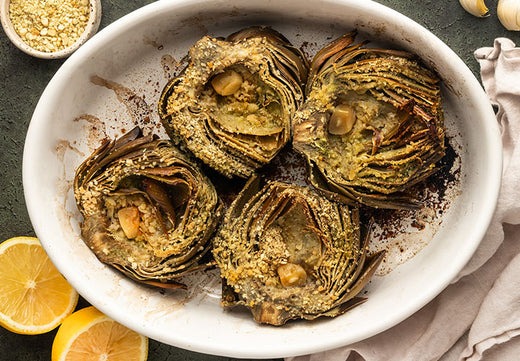
Roasting transforms them.
High heat evaporates surface moisture and triggers Maillard browning, creating savory depth. Without that step, they taste flat and soft.
You roast them to:
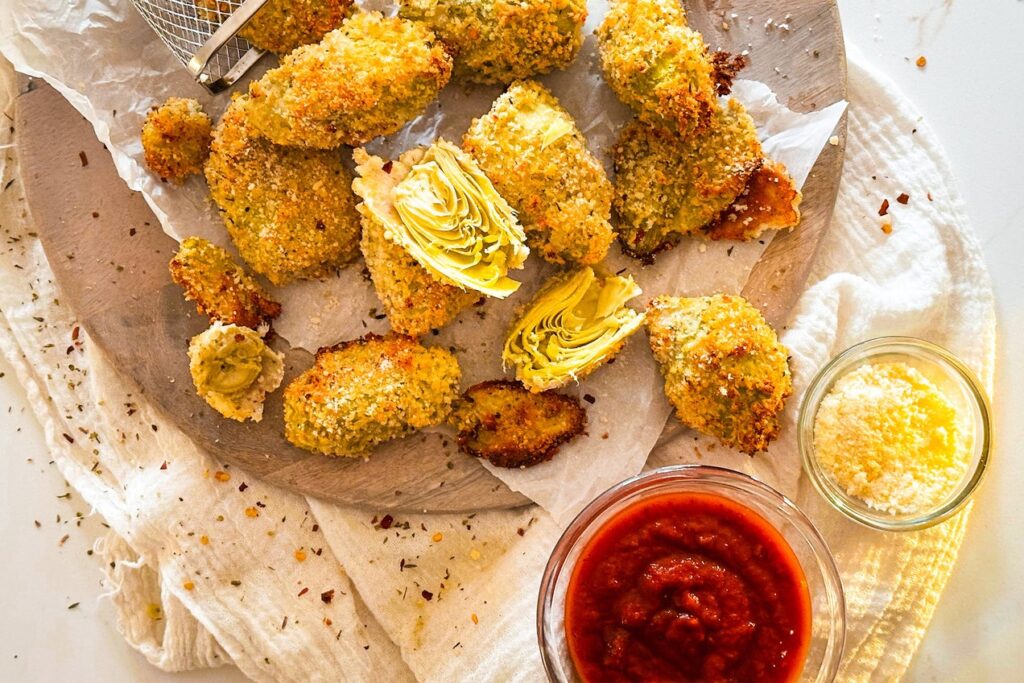
Understanding this changes your results.
High in water and fiber. Water must evaporate before browning begins.
Fat conducts heat efficiently and promotes browning. Too little = dry. Too much = greasy, inhibited crisping.
Draws out residual moisture and enhances natural nuttiness.
Contains sulfur compounds that mellow and sweeten under heat. Add finely minced so it roasts, not burns.
Contains proteins and fats that brown beautifully, creating crust.
Frozen artichoke hearts produce the crispiest texture when roasted. Canned hearts are softer but convenient and work well when thoroughly dried. Jarred marinated hearts offer strong flavor but brown less effectively due to oil content. For maximum crispness, choose frozen.
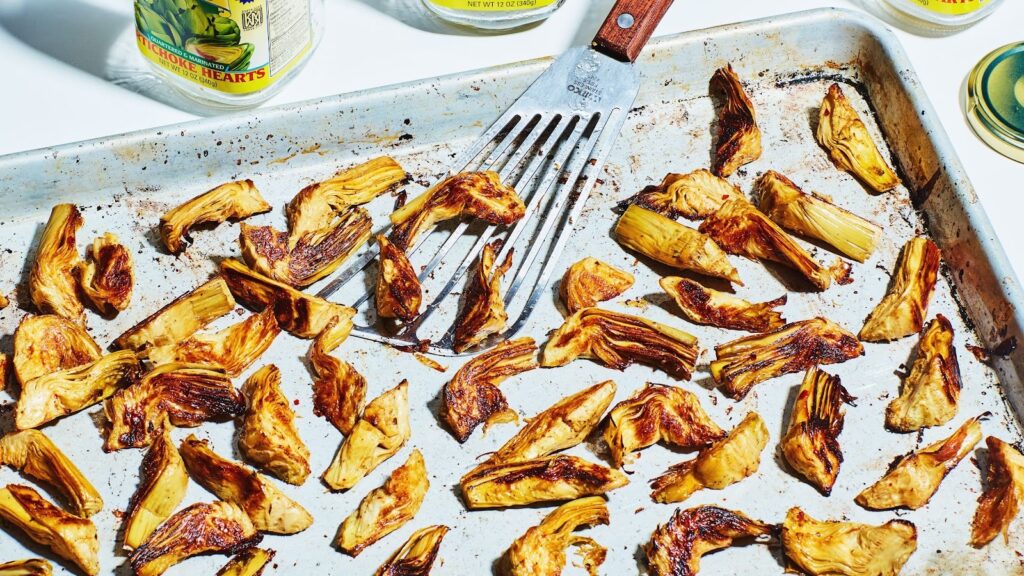
If artichokes are wet, they steam.
If I skip this step, browning drops dramatically. It’s that significant.
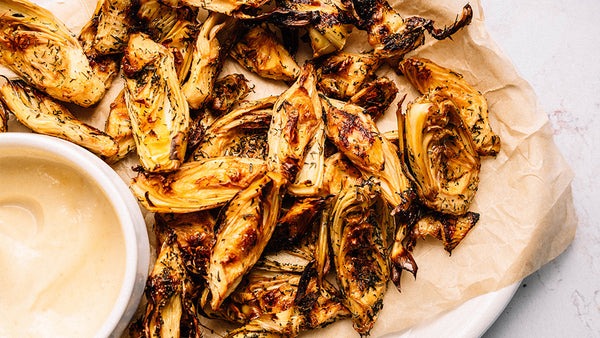
425°F (220°C).
A hot oven prevents steaming.
Maximizes direct pan contact = better caramelization.
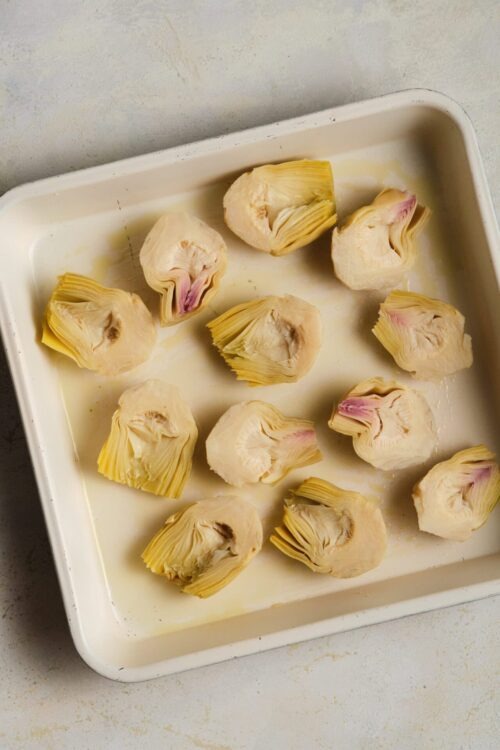
Dark pans overbrown bottoms. Glass traps steam.
Space allows evaporation. Overcrowding causes softness.
Midway flipping ensures even browning.
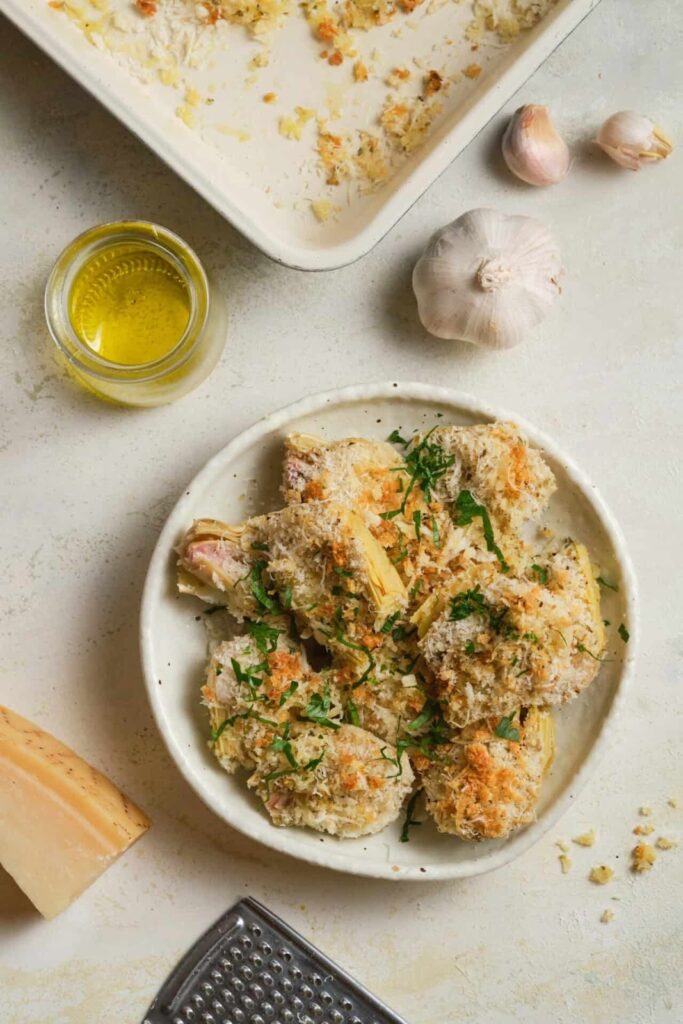
Preserves crisp texture.
Roast 20–25 minutes until the edges are golden and slightly crisp.
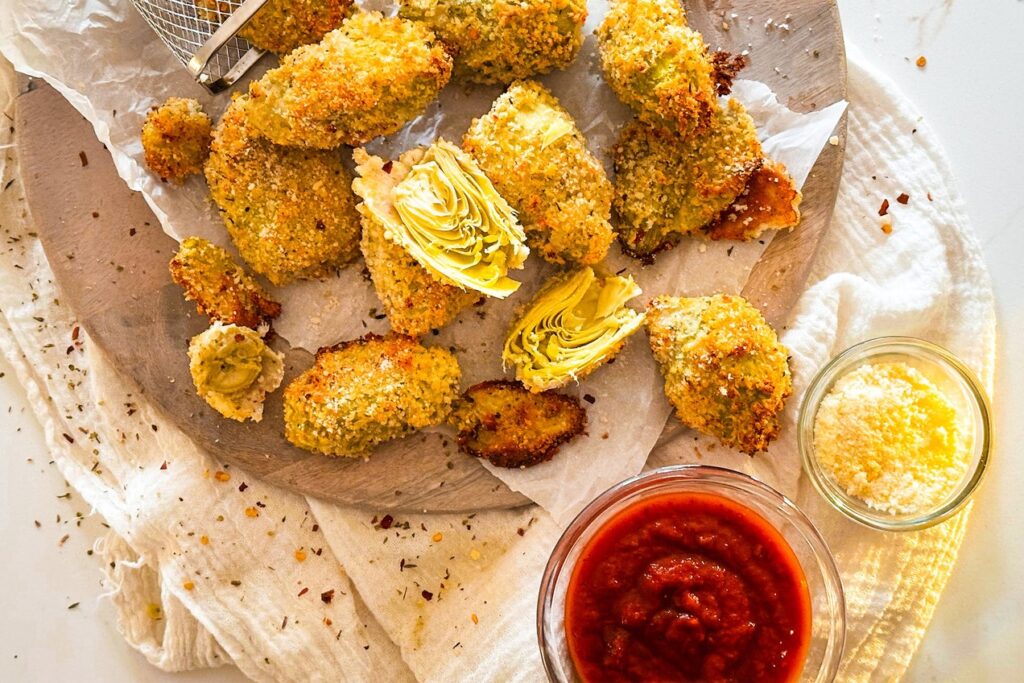
Pre-roast 10 minutes first.
Why?
Breadcrumbs trap moisture. Pre-roasting removes excess water so the crust stays crisp.
Then:
The result: crunchy top, creamy center.
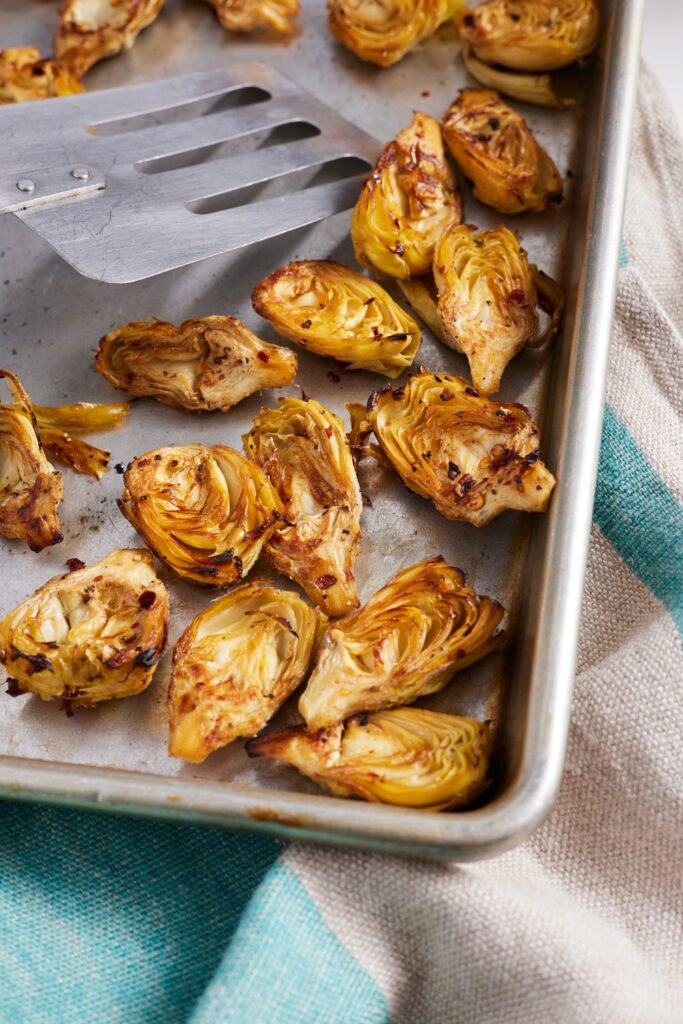
These small upgrades noticeably change texture.
Cause: Too much moisture or overcrowding.
Fix: Dry thoroughly and use larger sheet pan.
Cause: Oven not hot enough or lemon added early.
Fix: Increase heat and add acid at the end.
Cause: Pieces too large or added too early on very high heat.
Fix: Mince finely and coat in oil before roasting.
Cause: Skipped pre-roast.
Fix: Always pre-roast first.
These expand real-world use — not random flavor swaps.
Add oregano, cumin, and serve over farro or quinoa with yogurt sauce.
Skip breadcrumbs. Add crushed pork rinds + Parmesan.
Direct Answer (Featured Snippet Format – 42 words):
To air fry artichoke hearts, dry them thoroughly, toss with oil and seasoning, and cook at 375°F for 12–15 minutes, shaking halfway through. Add lemon juice after cooking. Air frying produces crisp edges faster than oven roasting.
Roast with garlic and red pepper flakes, then toss directly into hot pasta with reserved pasta water for sauce emulsification.
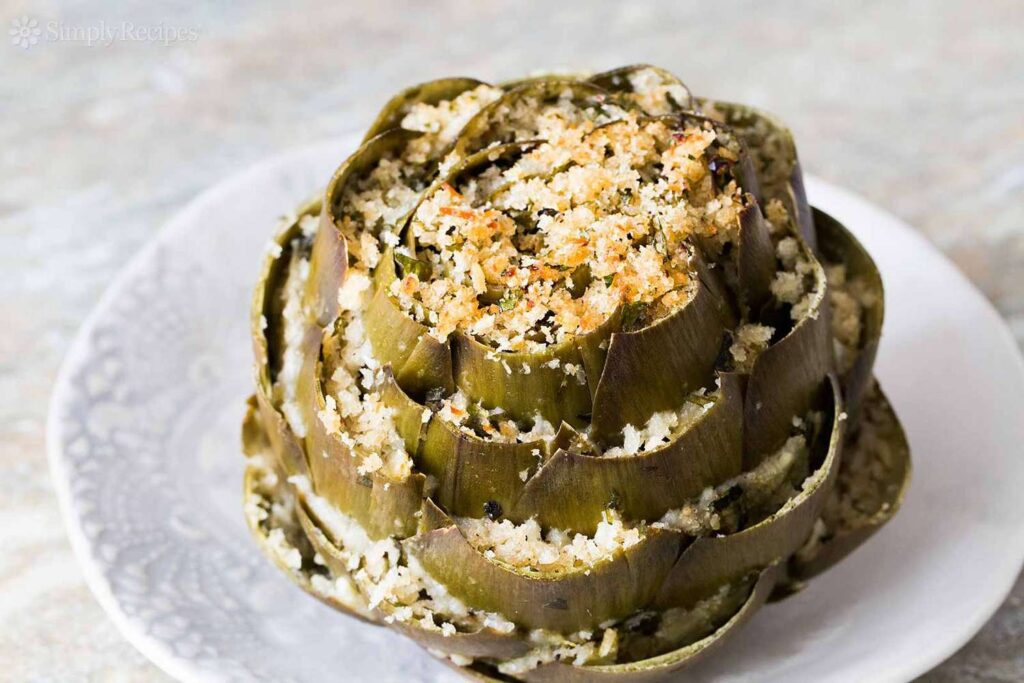
Store roasted artichoke hearts in an airtight container in the refrigerator for up to four days. Reheat in a 375–400°F oven or air fryer for 5–8 minutes to restore crispness. Avoid microwaving, as it softens texture.
Artichoke hearts reward precision.
Control moisture.
Use high heat.
Add acid last.
When those fundamentals are handled correctly, the result isn’t just “good for canned vegetables” — it’s deeply savory, crisp-edged, and worthy of serving at a dinner party.
This guide prioritizes real cooking results over filler. If you follow the technique, you’ll taste the difference immediately.
This roasted artichoke hearts recipe transforms simple canned or jarred artichokes into a crispy, flavorful side dish with golden edges and a tender center. By roasting at high heat with olive oil, garlic, and herbs, the artichokes develop rich caramelized flavor and a satisfying texture. This versatile dish works as a side, appetizer, salad topping, or pasta addition and comes together quickly with minimal ingredients.
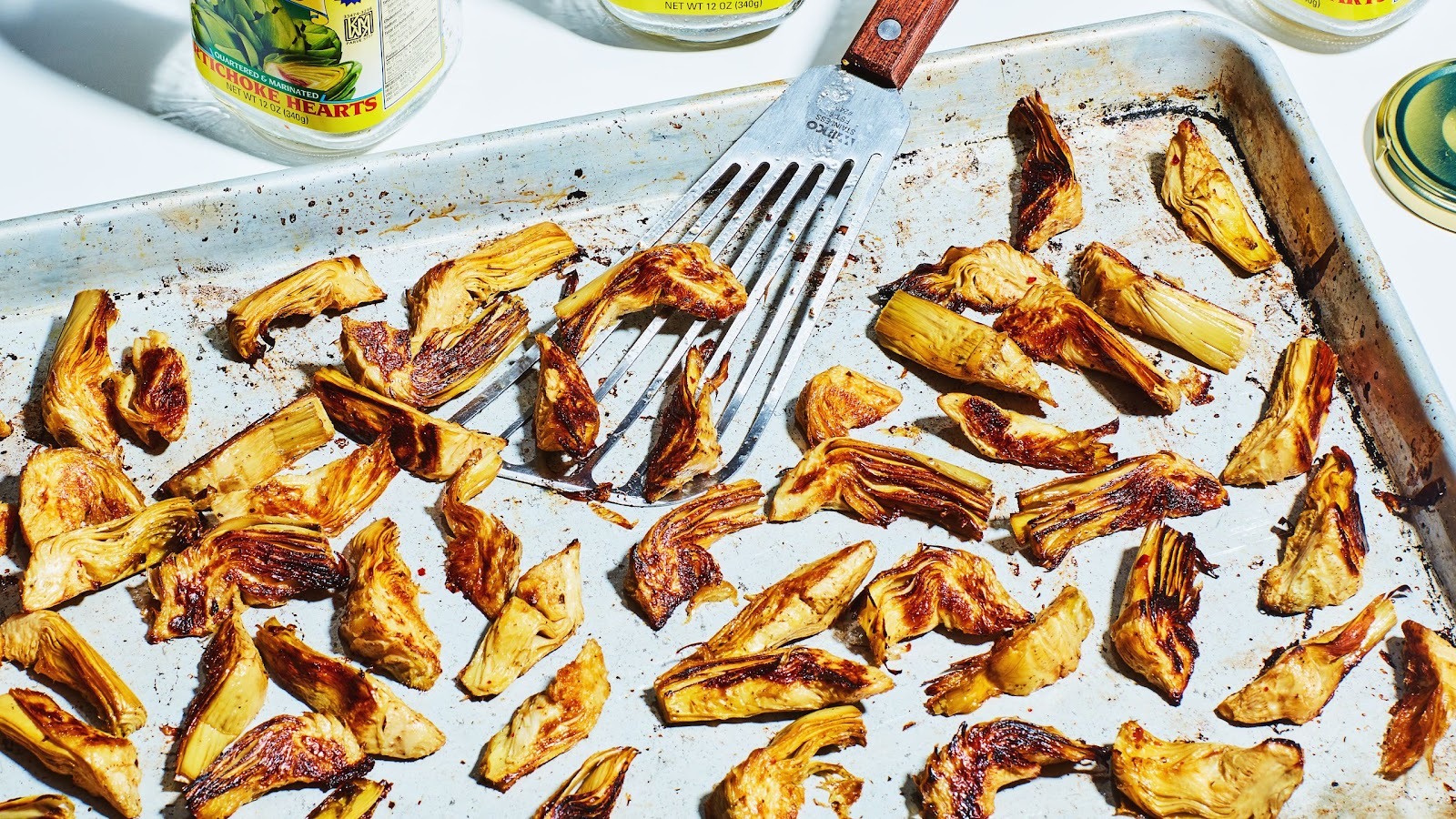 Preheat the oven to 425°F (220°C).
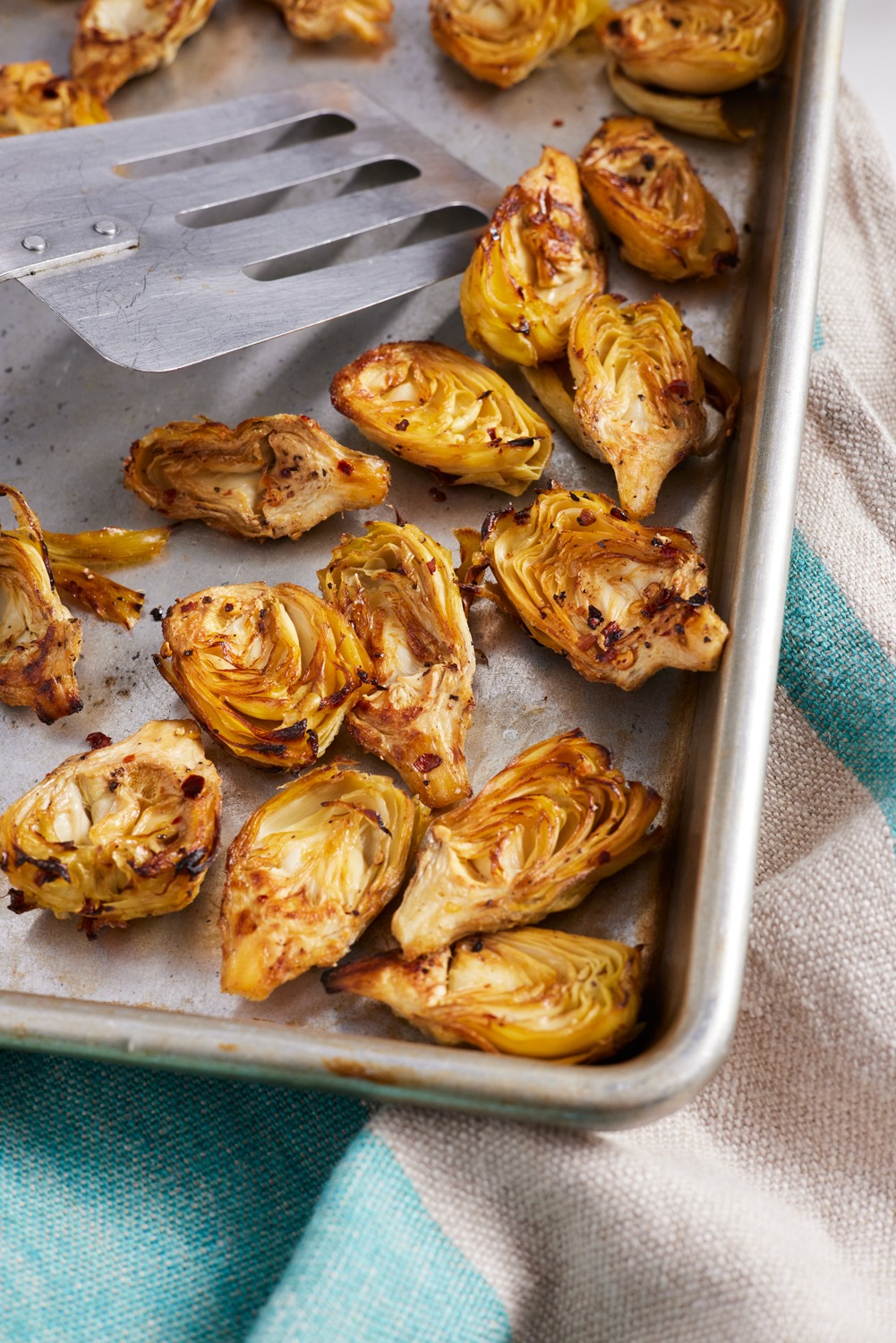 Drain and thoroughly dry artichoke hearts.
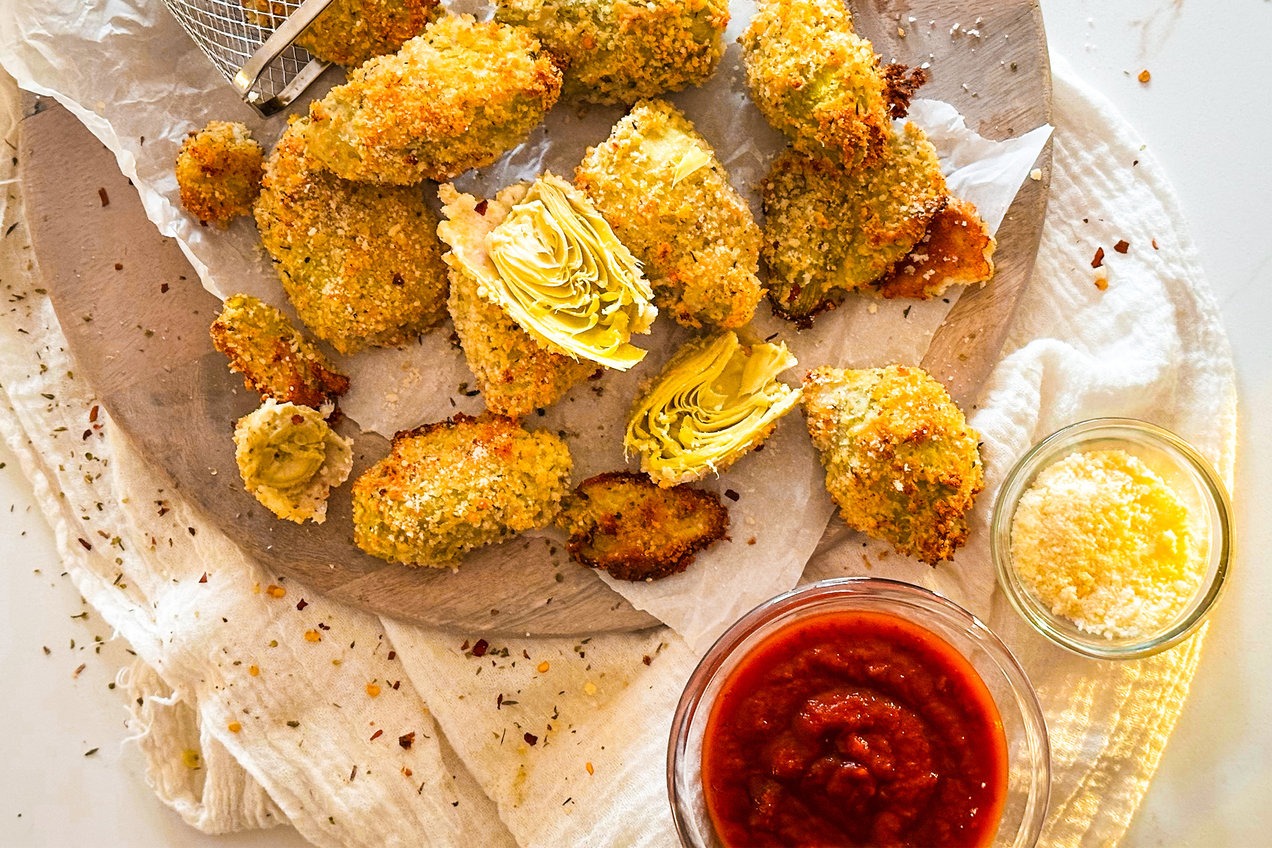 Toss with olive oil, garlic, salt, pepper, paprika, and lemon zest.
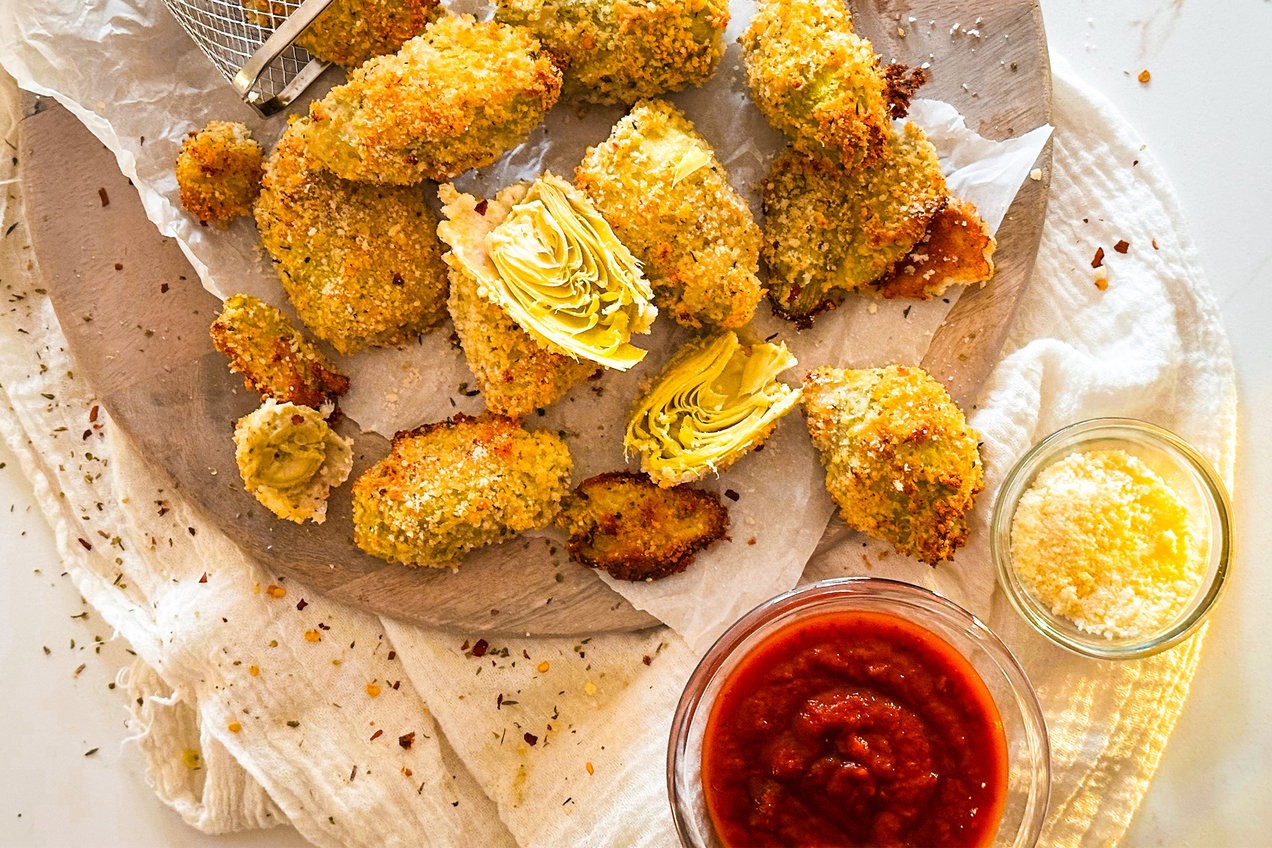 Arrange cut side down on parchment-lined sheet.
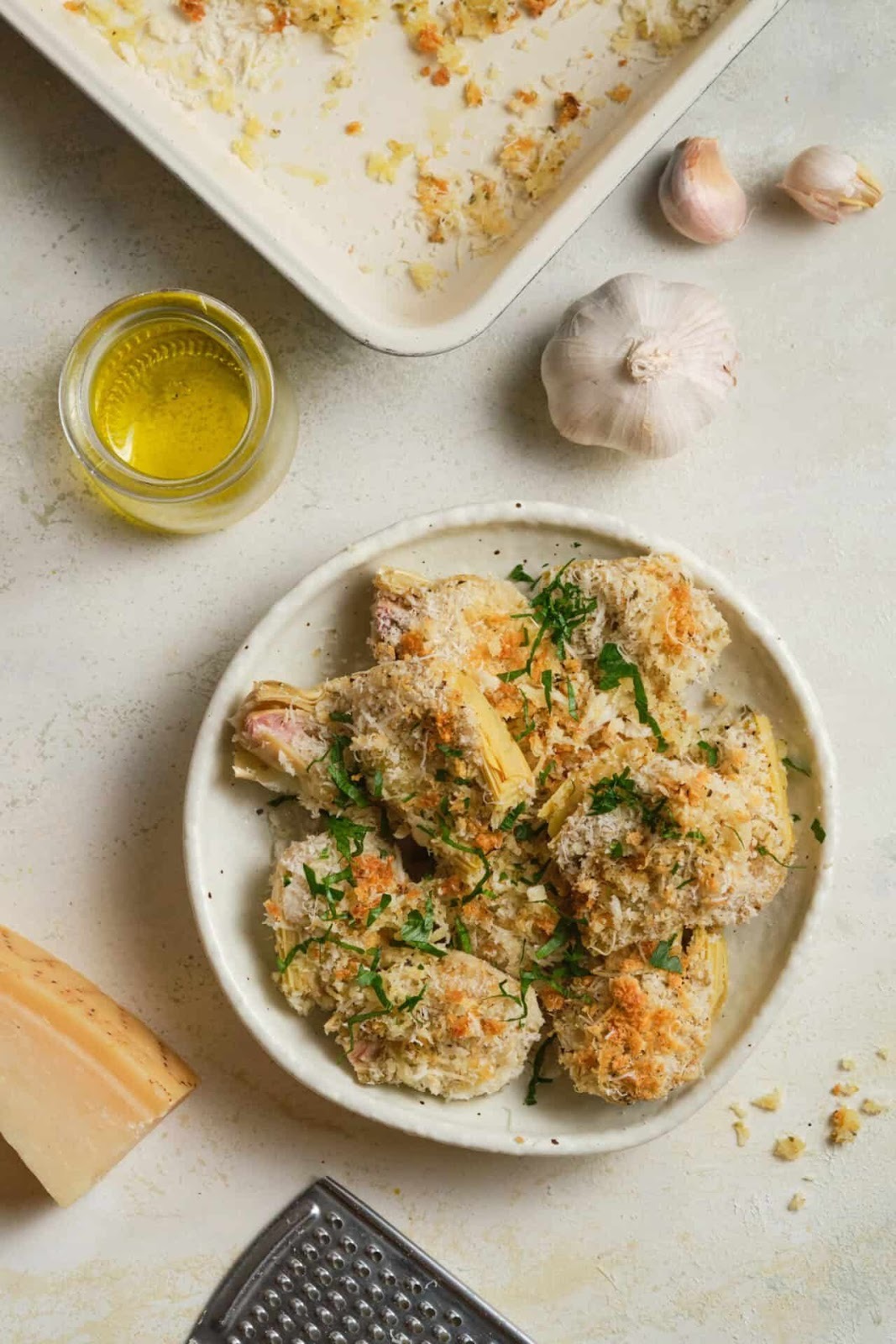 Roast 20–25 minutes, flipping halfway.Remove and immediately add lemon juice.
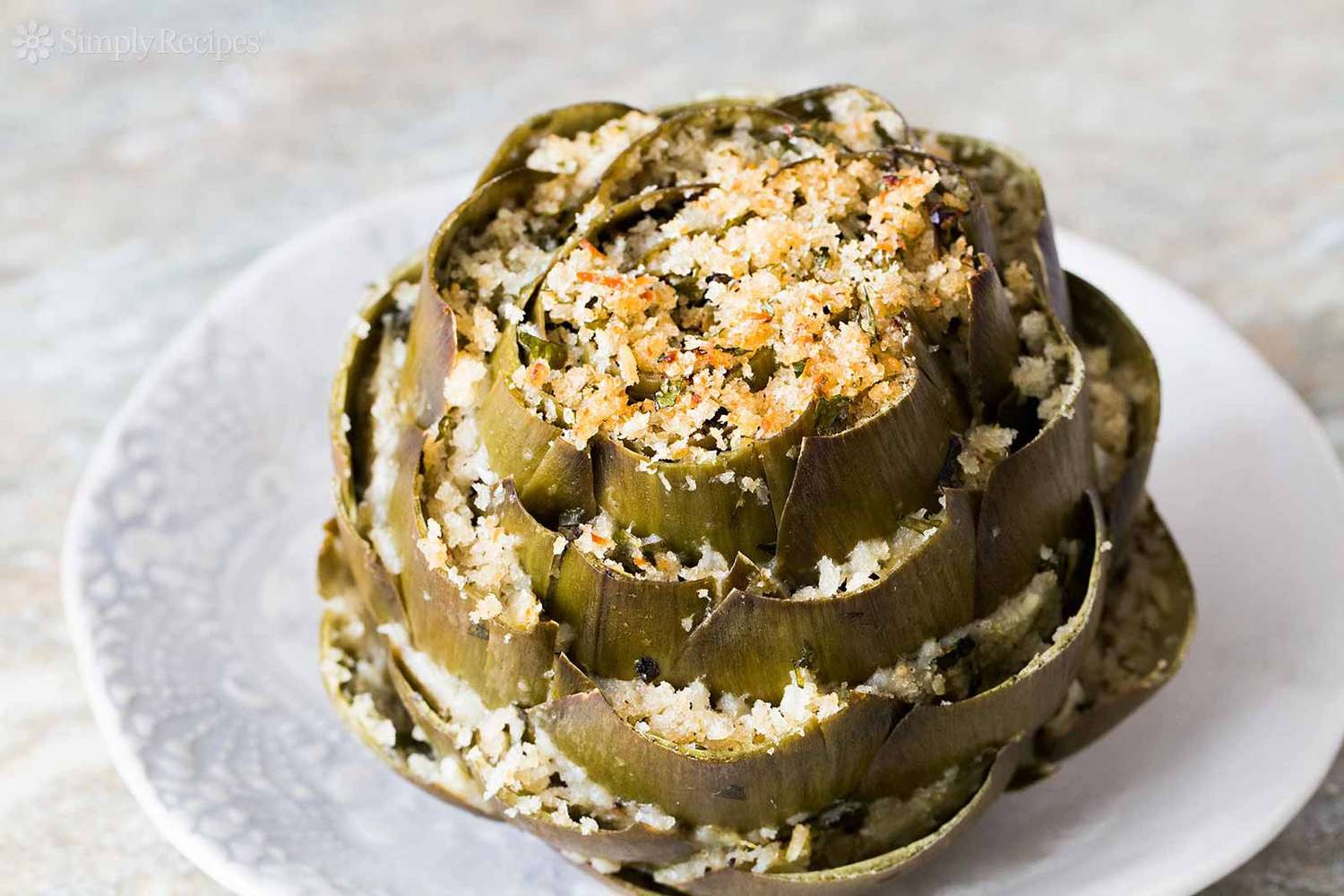 Garnish and serve warm.After 10 minutes roasting:Top with ½ cup panko + ¼ cup Parmesan mixed with 1 tbsp olive oil.Bake for an additional 10–12 minutes.Broil 1–2 minutes.
Servings 4
* Percent Daily Values are based on a 2,000 calorie diet. Your daily value may be higher or lower depending on your calorie needs.
Refrigerate for up to 4 days.
Reheat in the oven or air fryer only.


